WAF Rule Updates for the New Year: Navigating CVE Season 2026
January is the traditional kickoff for CVE season, and 2026 is shaping up to be the most active year yet for web application vulnerabilities. As security teams return from the holidays, the first order of business is updating WAF rule sets to cover the wave of newly disclosed CVEs. Here’s what you need to prioritize this week.
The January CVE Dump
The National Vulnerability Database typically sees a surge in published CVEs each January, as disclosures held back over the holiday period are released in bulk. In 2026, early indicators suggest this January dump will be particularly large, with several critical-severity vulnerabilities affecting widely deployed web frameworks and API gateways.
Your WAF rule team should be watching for new rules covering:
- RCE in popular PHP frameworks. January CVEs targeting Symfony and Laravel runtime components are expected. Pre-emptively enable generic RCE detection rules.
- Authentication bypass in OAuth libraries. Multiple CVEs in OAuth 2.0 implementations were reported in late 2025 and will publish this month. Update your token validation rules.
- SQL injection in ORM layers. ORM abstraction doesn’t eliminate injection risk — several new CVEs target query builder implementations that fail to escape parameters properly.
Updating Managed Rule Sets
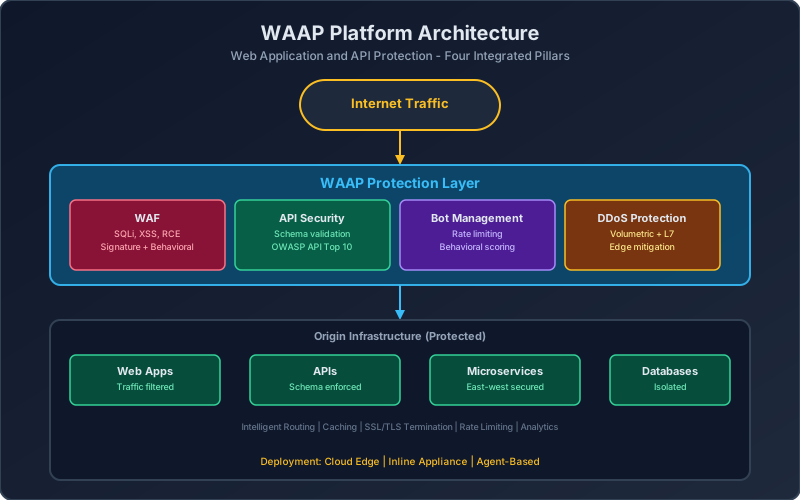
Most WAAP platforms ship managed rule sets that are updated automatically. But “automatic” doesn’t mean “instant.” Check your WAAP dashboard to confirm that managed rule updates are applied within 24 hours of release. Some platforms stage updates by default, requiring manual approval.
If you’re running a self-managed WAF (like ModSecurity with the OWASP Core Rule Set), January is the time to pull the latest CRS version and test it against your staging environment.
Pre-Emptive Mitigations
While waiting for vendor-supplied CVE rules, deploy these generic mitigations:
- Tighten request body limits. Many RCE attacks exploit file upload functionality. Reduce upload size limits to the minimum your application needs.
- Enable generic XXE detection. XML External Entity injection is a recurring theme in January CVEs.
- Restrict debug endpoints. Ensure
/debug,/info,/health, and/actuatorendpoints are blocked at the WAF level, not just in application config.
The Bottom Line
January CVE season rewards the prepared. Have your WAF rule update process documented, test new rules in log-only mode before enforcing, and keep generic mitigations enabled until vendor rules are battle-tested. Your application will thank you when the first critical CVE of 2026 hits the headlines.
For a deeper dive into east-west API traffic protection that complements your edge WAF, visit microsegmentation.uk. And for the latest on AI-driven security automation, check out aisecurities.uk.
Want to go deeper? Check out these resources on Amazon:
As an Amazon Associate I earn from qualifying purchases.